Invalid email address
Free Influencer Marketing Series
Success! Enjoy the series! Part 1: How an agency took a brand from 0 to $1MM in 4 months using influencers & ads
Free Influencer Marketing Series
Success! Enjoy the series! Part 1: How an agency took a brand from 0 to $1MM in 4 months using influencers & ads


User-generated content isn't new. What's new is the scale, the sophistication, and the gap between brands running it well and brands still treating it like a nice-to-have. The best-performing campaigns on Meta and TikTok right now are built almost entirely on creator content. Targeting is automated. What wins is creative — and UGC ads are delivering 4x higher CTR and 50% lower CPC than branded alternatives.
The exact steps brand and agency teams use to go from zero to live creator program in 30 days.
MightyScout will send you this resource plus occasional content on influencer marketing and UGC. Unsubscribe anytime. Privacy Policy
See how MightyScout tracks your creator & UGC campaigns
Book a DemoThis guide is for marketing and influencer teams that want to run UGC campaigns with discipline: the right creators, the right briefs, airtight content rights, and influencer tracking that doesn't fall apart the moment a Story disappears. We'll skip the basics and go deep on what actually moves the needle.
80–100%
Share of creator content in paid mixes at top DTC brands
10–20/wk
New creative assets needed to maintain testing velocity
142%
Higher engagement on TikTok Spark Ads vs. standard in-feed
3–7d
Typical creative fatigue window on TikTok
00 Background
User-generated content didn't start with TikTok. It didn't start with Instagram. It started the moment brands lost exclusive control of the narrative about their own products — which, in the internet age, happened faster than most marketing departments were ready for.
Understanding where user-generated content came from matters for one practical reason: it tells you why it works. The trust consumers place in UGC isn't a trend. It's the latest expression of something that has always been true — people trust other people more than they trust companies.
Pre-internet era
Before social media, before review sites, before hashtag campaigns — word of mouth was user-generated content. A neighbor recommending a plumber. A coworker raving about a restaurant. A friend warning you off a car brand after a bad experience. Brands couldn't control it, couldn't predict it, and couldn't manufacture it. Early loyalty programs and referral incentives were all attempts to harness organic word of mouth at scale. The underlying dynamic — people trusting peer recommendations over advertising — was the same then as it is now.
2000s
The first major digital shift came with Web 2.0 — the era of participatory internet that gave users the ability to create, not just consume, content online.
Amazon reviews (scaled through the 2000s) made the product review the first mass-scale user-generated content format. Any customer could publish an opinion that would influence thousands of future buyers. Amazon's willingness to display negative reviews — radical at the time — established the credibility that made UGC powerful. The purchase likelihood for products with five reviews is 270% greater than for those with none — a dynamic established in this era that has only intensified since.
Yelp, TripAdvisor, and Rotten Tomatoes formalized user-generated content as a purchase decision tool across restaurants, travel, and entertainment. By the mid-2000s, no major purchase decision happened without a review check.
YouTube (2005) democratized video content. For the first time, consumers could produce video reviews, unboxings, tutorials, and testimonials without a studio or a broadcast deal. Early YouTube creators weren't called "content creators" or "influencers" — they were just people who liked talking about stuff on camera. Brands barely noticed. Then the view counts started growing.
2010s
Instagram (2010) put visual user-generated content at scale. Brands quickly realized that customers sharing photos of their products — meals at restaurants, outfits from retailers, gear from outdoor brands — was more persuasive than any ad they could produce. GoPro, Lululemon, and Starbucks built entire marketing strategies on Instagram user-generated content.
The influencer category emerged between 2012 and 2016. As some social media users built meaningful audiences, brands started paying them to create content. Influencer marketing was born. By 2016, it was a $1.7 billion market. By 2022, it crossed $16 billion.
Snapchat Stories (2013) and Instagram Stories (2016) changed the monitoring game permanently. Ephemeral content — posts that disappear after 24 hours — meant brands running product gifting campaigns suddenly had to contend with content that vanished before they could capture it. The need for automated influencer tracking tools became real.
The authenticity crisis (2017–2019): as influencer marketing scaled, audiences got skeptical. Mega-influencer posts started feeling like ads. Engagement rates dropped. The industry began shifting toward micro- and nano-influencers — and toward prioritizing content quality over audience size.
2020s
TikTok's algorithm (2019–2020) distributes content based on engagement signals — meaning a creator with zero followers could go viral on their first video. This democratized reach in a way no previous platform had. It also established short-form, native, authentic, hook-driven video as the dominant format for user-generated content advertising across every major platform.
The pandemic creator surge (2020–2021): millions of people stuck at home with smartphones started creating content. The supply of creators exploded. Brands discovered that authentic video content filmed on an iPhone in someone's kitchen converted better than expensive studio productions.
The UGC creator category formalized (2021–present): a new profession emerged — the user-generated content creator. These are individuals hired to produce authentic-looking content for brands, not to post to their own channels, but to deliver assets the brand controls. The UGC creator category grew 93% year-over-year between 2024 and 2026. Average rates dropped 44% to $198 per video as supply increased.
Where the market stands today (2026): the global user-generated content platform market is valued at $7.1 billion and projected to reach $64.3 billion by 2034 — a 28.8% compound annual growth rate. For the best-performing brands on Meta and TikTok, user-generated content is no longer a tactic layered on top of marketing. It is the marketing.
84% of consumers trust user-generated content more than brand-produced content. 92% trust recommendations from people they know over all other advertising. These aren't preferences — they're deeply embedded social heuristics. Humans evolved to weight peer information more heavily than institutional information.
84%
Of consumers trust UGC more than brand-produced content
92%
Trust recommendations from people they know over all advertising
270%
Higher purchase likelihood for products with five reviews vs. none
Pillar 01
Pillar 02
Pillar 03
01 The terminology
Before anything else: these terms get used interchangeably in the industry and they shouldn't. Getting the definitions straight isn't pedantic — it changes how you structure campaigns, allocate budget, and measure success. Here's how to think about each one.
The broadest category
The output
Formats: video, photo, reviews, testimonials, Stories — anything that blends into the feed
Asset-driven
Cost per asset: $75–$500 · Found on Upwork, Fiverr, dedicated UGC platforms
Reach-driven
Tiers: nano (<10K) · micro (10K–100K) · mid (100K–500K) · macro (500K–1M) · mega (1M+)
UGC creators vs. influencers
With Creator-run accounts ("farm accounts") model, cost per asset can drop to $10 or lower at volume.
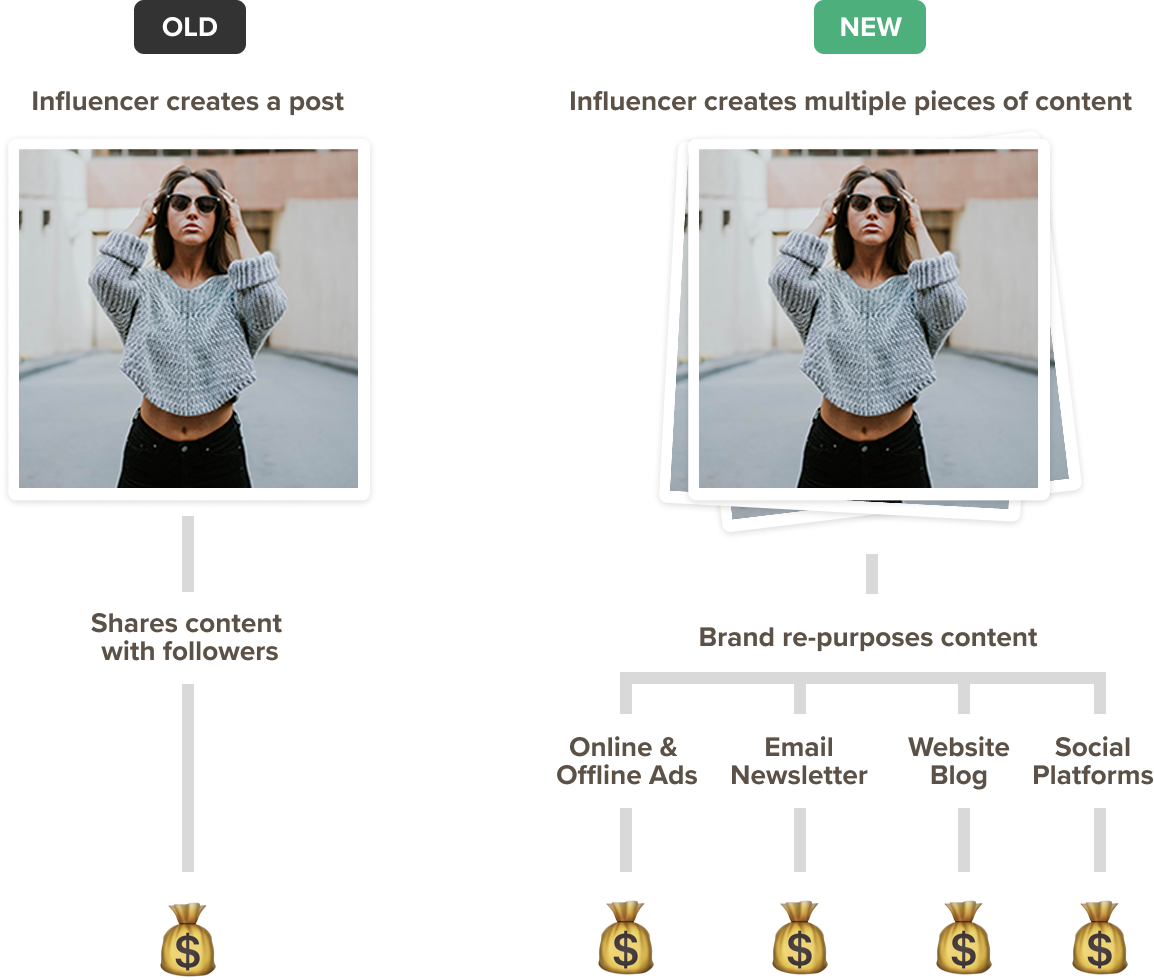
UGC creators and influencers are not competing strategies — the smartest brands run both in parallel. Influencer seeding generates organic content you can track and amplify. Commissioned UGC from content creators fills gaps in your paid creative pipeline. The operational challenge is managing both at scale without the workflow collapsing under its own weight. For the long-form version of how seeding → paid actually plays out, the 0 to 1M with influencers and ads breakdown walks through it end to end.
02 The four archetypes
Most user-generated content programs fall into one of four models. Knowing which one you're running changes everything about how you structure it.
Archetype 01
Send product to creators at no cost (other than COGS). No content is guaranteed — but structured product gifting programs with clear expectations and follow-up see 80–90% post rates vs. ~30–40% for pure no-strings gifting.
Building an organic content library, testing what angles work before committing paid spend, finding breakout creators to formalize as brand ambassadors.
At $20 COGS and a 33% post rate, each organic post costs ~$60 in product. Agency-produced content runs $300–$1,000+ per piece. The content is also more authentic — it performs better in paid because it is real.
The Kynship seeding system that took Animal House Fitness (MonkeyFeet) from $0 to $7M in year one reached 500 influencers per month, converting 20% to opt-in, then 30% of those to actual posts — generating 60–90 unique content pieces monthly at cost-of-goods only. One early creator (Ben Patrick, "Knees Over Toes Guy") organically posted 143 pieces, generating four Joe Rogan podcast mentions — zero sponsorship.
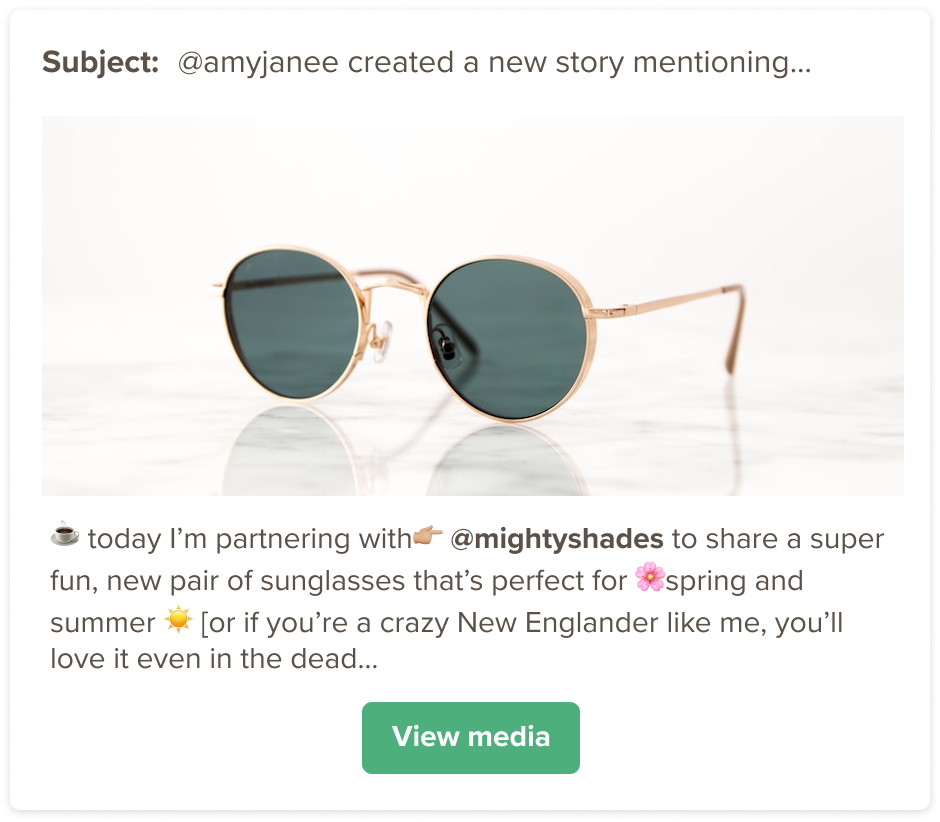
Without a tracking system, you'll miss most of what gets posted. Stories disappear in 24 hours. Tags get missed. You need real-time influencer tracking to capture every mention, post, and Story — or you're leaving attribution and creative assets on the table.
MightyScout monitors every mention, tag, and Story from your seeded creators in real time — so you never miss a post, and you always have assets ready for paid amplification.
Archetype 02
You hire UGC creators specifically to produce content to your specs — not to post it on their channels, but to deliver video or photo assets your team controls and uses in paid advertising or on your own channels.
Building a paid creative library fast, testing new hooks and angles, filling content gaps without building an in-house production capability.
Payment doesn't automatically equal ownership. Creators own their IP by default. Get a written agreement specifying rights transfer before content is delivered.
Archetype 03
Organic creator content gets boosted as paid ads — either from your brand handle or via whitelisting (running ads from the creator's handle). This is the highest-performing paid social playbook running right now.
Brands with even a small product gifting program who want to stretch organic content into paid ROI.
Don't pre-select which creator content you'll amplify. Most teams pick their "favorites" — the production-quality ones. That's wrong. Data consistently shows the scrappiest content wins. An obscure creator nicknamed "The Bless Up Guy" outperformed Joe Rogan content in the same campaign by 30% on CPA. Launch everything as Dynamic Creative Testing (DCT) and let the algorithm find winners.
Archetype 04
You hire creators to run dedicated accounts that look organic but operate as always-on content engines for your brand. Each creator gets their own account, posts daily, and has full creative control — you pay a flat monthly retainer.
Brands with visual/shareable products (DTC, beauty, food, tech accessories) and enough margin to support $500–$3K/month per creator.
Started with $30K capital. First 30 days: $60K–$80K revenue. Year one: $4M. Year two: $10M+ at 40–45% net margins. At peak: 30–45 creators posting 1–3 TikToks daily = 50+ videos per day. The response video strategy (targeting commenters on viral posts as free TikTok remarketing) drove the bulk of sales.
Do the math. 10 accounts at $1,500/month average = $15K/month in creator costs. One viral hit can return that in a single day. But you need high volume tolerance — most videos get minimal views. You're playing a hits game.
Just getting started
Product seeding
Need paid creative now
Commissioned UGC
Already seeding, want paid ROI
Seeding → amplification
High-margin DTC, want scale
Farm accounts
Three working models. Match to your stage.
Model 1 · Product seeding only
Plug in your numbers — we'll show how many pieces of content you'd generate, what it costs, and what an agency would charge for the same output.
30–40% no-strings · 80–90% structured
Pieces generated
66
Total product cost
$5,000
Cost per organic post
~$76
Agency-produced equivalent
$19,800 – $66,000
Structured product gifting programs with content expectations raise post rate to 80–90% — dramatically improving cost per post.
Model 2 · Commissioned UGC for paid ads
Model 3
$5K–$10K
$7,500
$15K–$30K
$22,000
$50K+
$65,000
Influencer tracking software (e.g., MightyScout) should be a line item in every tier. At scale, the manual monitoring cost in team hours exceeds the software cost within the first month.
03 Sourcing & vetting
The difference between a creator program that delivers and one that doesn't often comes down to who you recruit, not how much you spend.
Option 1 — Find creators already posting in your category. The highest-signal approach. If someone is already creating UGC in your niche — reviewing products like yours, talking to your target audience — they already know the creative language. Content will be more authentic, require less direction, and perform better. This is exactly what MightyScout's creator discovery is built for.
Option 2 — UGC marketplaces and platforms. Upwork / Fiverr (lowest cost, more vetting required), dedicated UGC platforms like Insense / Billo / JoinBrands (pre-vetted, higher rates), or creator communities — search #UGCcreator on TikTok / Instagram.
Option 3 — Activate your own customer base. If you already have customers who love the product, they're your best UGC source — both for authenticity and cost.
Content signals
Engagement signals
Red flags
Need a faster vet? Look up any creator's profile or check their real engagement rate in seconds — both free.
Rule across all outreach: personalize the first two lines to reference something specific about their content. Generic openers get ignored.
Product seeding / gifting (cold outreach — no fee)
Subject: [First name] — sending you [Product] if you're interested

Hey [First name],

Came across your [specific video / post] about [topic] — your take on [specific thing they said or did] was exactly the kind of content our audience resonates with.

We make [Product] — [one sentence: what it is and who it's for]. We'd love to send you one to try if it's something that fits your world.

No content requirements. If you use it and love it, great. If not, no worries.

Interested? Just reply with your shipping address and I'll get it out to you.

[Your name] · [Brand] · [Title]
Commissioned UGC (paid content — no posting required)
Subject: Paid content opportunity — [Product], [Creator's name]

Hi [First name],

I found your [content / channel] while looking for creators in [niche] — your [specific video or style] is exactly the vibe we're looking for.

I'm the [Head of Marketing / Influencer Manager] at [Brand]. We're building a paid creative library and would love to commission you for [X] videos for use in our ads and social channels. You wouldn't need to post anything publicly — we'd own the usage rights for paid advertising.

Quick details:
- Format: [TikTok-style vertical / Reels / etc.]
- Length: [21–34 seconds]
- Deliverables: [X videos]
- Fee: $[amount] per video
- Timeline: [X weeks]

I'll send a detailed brief if you're interested. Happy to set up a quick call or answer questions over email.

[Your name] · [Brand] · [Title]
Whitelisting ask (for organic poster who already created content)
Subject: Quick ask about your [Brand] post, [First name]

Hi [First name],

Love what you posted about [Product] — [specific compliment about the actual content].

We'd love to run your video as a paid ad on [TikTok / Meta] — meaning we'd promote it from your account (it keeps all your original engagement) and we'd pay you [fee] for the usage rights.

From your end, it takes about 5 minutes to set up. On TikTok, you'd just generate a Spark code for the post. On Meta, we'd request access through the Partnership Ads tool.

The ad would run as "Paid Partnership with [Brand]" — fully disclosed. No changes to the content.

Interested? Happy to send a one-pager on how it works if it's your first time with whitelisting.

[Your name] · [Brand] · [Title]
Ambassador conversion (top creator → ongoing relationship)
Subject: Want to make this ongoing? — [Brand] x [Creator name]

Hey [First name],

Your [video / post] about [Product] performed really well — [optional: specific stat if you have it].

We'd love to talk about making this an ongoing partnership. Concretely, we're thinking:
- [X] pieces of content per month
- $[range] monthly retainer + [commission / product allowance]
- Full creative control — you know what performs for your audience better than we do

Nothing locked in yet — I'd just love a 20-minute call to see if it makes sense for both sides.

Would [day/time] work?

[Your name] · [Brand] · [Title]
Agency — pitching a UGC program to a client
Subject: A creator program framework for [Client Brand]

Hi [Client name],

Following our conversation about [topic], I wanted to share a framework for a creator program we'd propose for [Brand].

Rather than one-off influencer placements, we'd build a structured pipeline — seeding product to [X] creators/month, commissioning [X] UGC assets for paid, and tracking every post in real time to capture content for amplification.

What this looks like in month one:
- [X] creators seeded (no content guarantee, cost = product only)
- [X] UGC videos commissioned for paid creative testing
- Real-time influencer tracking via MightyScout — every post, Story, and mention captured automatically
- Biweekly performance report with post volume, reach, top-performing content, and paid metrics

Happy to walk through the full proposal on a call — I can also show you what the MightyScout campaign reporting dashboard looks like so you can see exactly what your clients would see.

[Your name] · [Agency] · [Title]
04 Briefing
The brief is where most UGC programs fail before they start. Too vague and you get content that doesn't perform. Too prescriptive and you get a stilted, fake-feeling video that tanks in paid.
Campaign objective (be specific)
Don't say "drive awareness." Say: "content that converts cold audiences scrolling TikTok — goal is click-through to product page."
Target audience description
Not your brand's overall customer — who is this specific ad for?
Format specs
Platform · aspect ratio · length · talking-head, demo, or voiceover.
Product details + differentiators
2–3 specific differentiators to hit, not a list of 10 features.
"Must vs. Maybe" list
Musts (brand mandatories) · Maybes (creative sandbox).
Three video references
Pull 3 from TikTok or Meta Ad Library. "Be conversational" means nothing. A 30-second example means everything.
FTC compliance guidance
Specify "#ad" or "Paid Partnership" format.
Personalized briefs see 3x higher creator acceptance. A 15-minute alignment call before delivery dramatically reduces revision rounds.
UGC creator brief template
BRAND: [Brand Name]
PRODUCT: [Product name + 1-sentence description]
CAMPAIGN GOAL: [e.g., drive paid ad conversions on TikTok for cold audiences]
TARGET VIEWER: [e.g., women 25–34, health-conscious, follows fitness/wellness accounts]

FORMAT:
- Platform: TikTok
- Specs: 9:16, 1080x1920, 21–34 seconds
- Style: Talking-head testimonial with product demo

MUST INCLUDE:
- [Differentiator 1]
- [Differentiator 2]
- Clear verbal CTA at end: "[Specific CTA line]"
- FTC disclosure: "#ad" in caption

CREATIVE SANDBOX (your choice):
- Hook format, setting, tone
- Whether to show face or use voiceover

DO NOTs:
- Do not read from a script — conversational only
- Do not mention competitors by name
- Do not use profanity

REFERENCE VIDEOS:
1. [Link]
2. [Link]
3. [Link]

DELIVERABLES:
- 1 final video (raw footage optionally requested at +$XX)
- Submitted via [platform/email] by [date]
- Revision policy: 1 revision included

COMPENSATION: $[amount] — payment upon delivery confirmation
USAGE RIGHTS: Full usage rights for paid advertising, organic social, website, email — in perpetuity
Before you approve creator content for paid — run it through this. Score each criterion 1–3.
1
Misses the mark
2
Acceptable, could be stronger
3
Strong, ready to launch
Criteria
27–30
Launch immediately. High-confidence paid candidate.
21–26
Approve with minor feedback. Test in paid at low budget.
15–20
Request one revision round.
Below 15
Do not approve. Return with detailed brief notes.
Automatic rejection: no FTC disclosure where required, competitor named negatively, unsubstantiated health claims, brand name mispronounced or misspelled on screen, audio unusable.
05 Rights & whitelisting
This is where a lot of brand and agency teams get burned — either by not securing rights upfront, or by overpaying for rights they didn't need.
Whitelisting means the brand runs paid ads from the creator's personal account rather than the brand handle. The "Paid Partnership" label stays, but the content shows up in feeds as creator content, not brand content.
Why it works: each creator's account carries its own audience signal. Meta and TikTok use those signals to optimize delivery — giving your ad access to audiences that wouldn't normally see your brand content.
Meta Partnership Ads
TikTok Spark Ads
Best practice: run brand-handle and whitelisted creative simultaneously in separate ad sets. Let the auction decide. Often they serve different audiences — both can win.
06 Paid ads
Creative is now the single largest lever in paid social. Meta's Advantage+ and TikTok's Smart Performance handle audience targeting automatically. What determines whether you scale profitably is the creative itself.
Baseline
Advanced
Conversion-style
Transformation
Social proof
The 3-3-3 Framework: three dimensions × three options = 27 combinations to test systematically. This prevents cannibalization — Meta penalizes ad sets running the same hook and angle against each other.
The 3-3-3 framework
$1K – $5K/day spend
10–20
new creative assets per week
$5K – $50K/day spend
50–100+
new creative assets per week
2–3x
Kill signal — target CPA after 50+ conversions
5–7d
Minimum test duration before judging a creative
300%+
Performance variance between hook variations — the single biggest lever
Key insight: don't pre-pick creative winners. Most teams pick their "favorites" — the production-quality ones. That's wrong. An obscure creator with under 10K followers outperformed Joe Rogan-adjacent content by 30% on CPA and captured one-third of all attributed purchases in the same campaign. Launch everything. Let the data decide.
UGC is a shot-on-goal game — but your shots should be calculated. Before you double down on creators or content, run a discovery sprint to find out what actually performs.
Days 1–14
Brief every creator to produce content across all formats in their first 10–15 videos. Because all creators are following the same formats, it becomes easy to isolate which formats are underperforming — not just which creators are.
Days 14–21
Cut the formats that aren't performing. Simultaneously identify underperforming creators — whether due to inconsistency, poor fit, or account health issues. Cycle them out early before it becomes a bigger problem.
Days 21–30
By now you've isolated your 3 winning formats. Cycle in new creators briefed exclusively on what works. Their success rate is higher because they're not wasting videos on formats you already know don't convert — and they have examples from your existing creator network to follow.
The output: a tight creator roster, three proven content formats, and a content engine that compounds instead of guessing.
4x
Higher CTR — UGC vs. non-UGC paid ads
50%
Lower CPC — UGC vs. non-UGC paid ads
142%
Higher engagement — Spark Ads vs. standard in-feed
43%
Higher conversion rate — Spark Ads vs. standard
24%
More time spent watching — Spark Ads vs. standard
Meta e-commerce benchmarks · 1,247 accounts, $87M spend
Case study — Guava Family: 98% higher CTR for acquisition · 40% lower CPA for remarketing · 70–80% higher ROAS — driven by swapping studio creative for high-volume UGC and letting Dynamic Creative Testing find the winners.
07 Tracking & scale
Most creator programs don't fail because of bad creators or weak briefs. They fail operationally — content gets missed, assets don't get captured, reporting takes three days to pull together, and nobody can prove what worked.
Picture a typical campaign without dedicated influencer tracking infrastructure. You've seeded 75 creators. Some post to their feeds — you catch those if you check their profiles manually every day or two. Some post Stories — you miss most of those because Stories disappear in 24 hours and nobody is watching 75 accounts around the clock. A few tag your brand; most don't. A video goes semi-viral — you find out two weeks later. You never downloaded the asset. It's too late to whitelist it.
Then reporting time comes. Someone spends two days building a deck in Google Slides, pulling screenshots manually, copy-pasting engagement numbers from individual posts. The numbers are incomplete because you missed content. The report looks thin because you can't show what you don't have.
“Before MightyScout, our team spent countless hours on our influencer programs. 6–8 hours of our time was monitoring influencer profiles 7 days a week, reporting on monthly performance by hand, creating lists of influencer selections for clients to choose from.”

Carly, Digital Strategist
TURNERPR — Communications & Digital Marketing Agency
Another agency said it would have taken 5–6 additional hires to do what MightyScout now does for them. Manual influencer tracking at scale costs the average marketing team approximately $18,000 per year in staff time — calculated at 15 hours/week at a $25/hour average marketer rate.
The problem without a tool: finding content creators who are already posting authentically in your category requires hours of manual searching — hashtag browsing, profile vetting, competitor tagging checks.
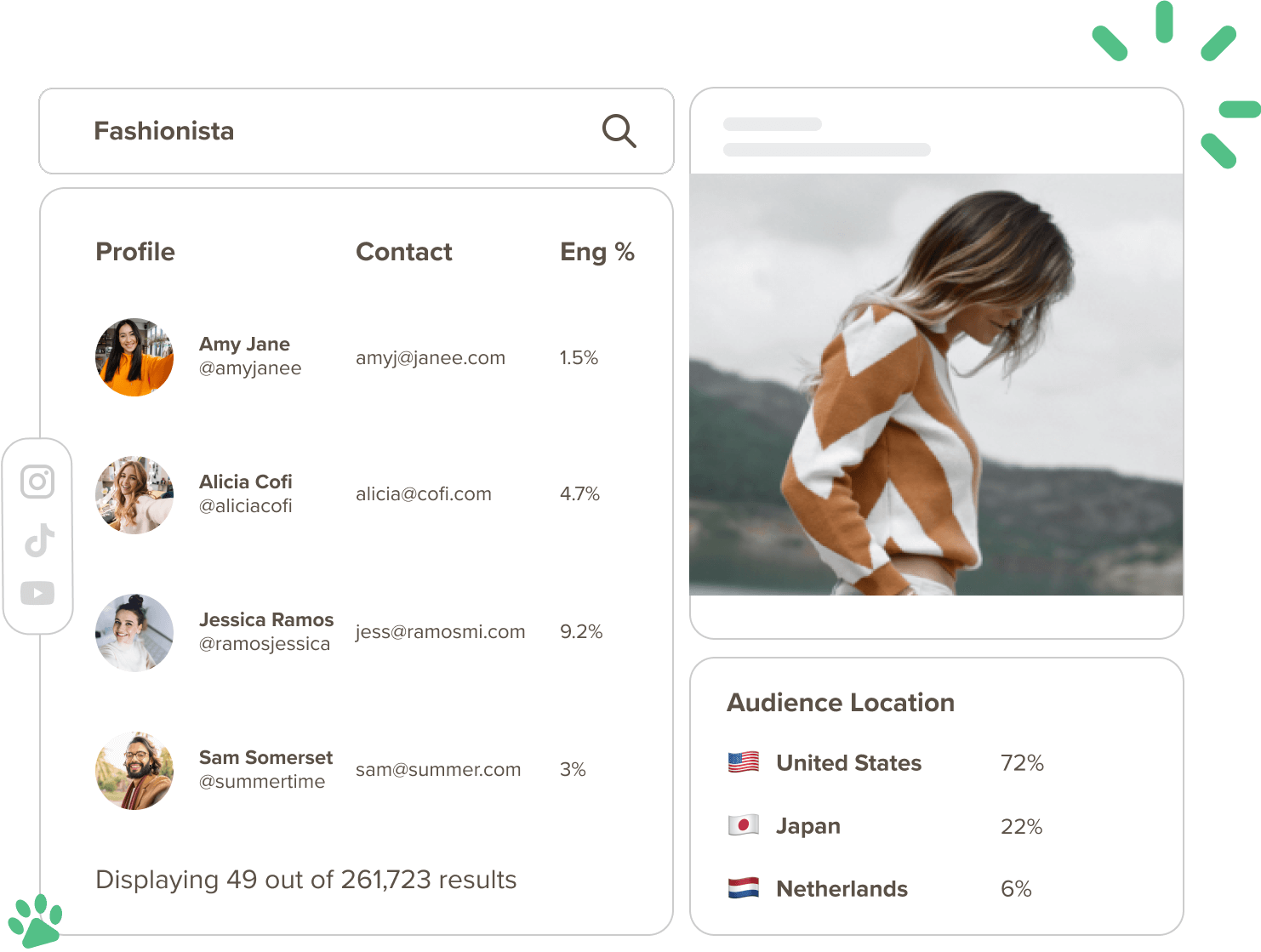
How MightyScout helps: MightyScout's discovery functionality lets you find creators already posting about your product category, your brand, or your competitors — before you've even reached out. Instead of browsing a generic creator marketplace, you're finding people who have already demonstrated content quality in your exact niche. A creator who already posts about your category produces better content with less direction than a "lifestyle creator" who'll post about anything.
In practice: input your brand name, relevant hashtags, or competitor brands (see MightyScout's creator search in action). MightyScout surfaces creators already engaging in that conversation. Vet by content quality, not follower count. Build your outreach list from there.
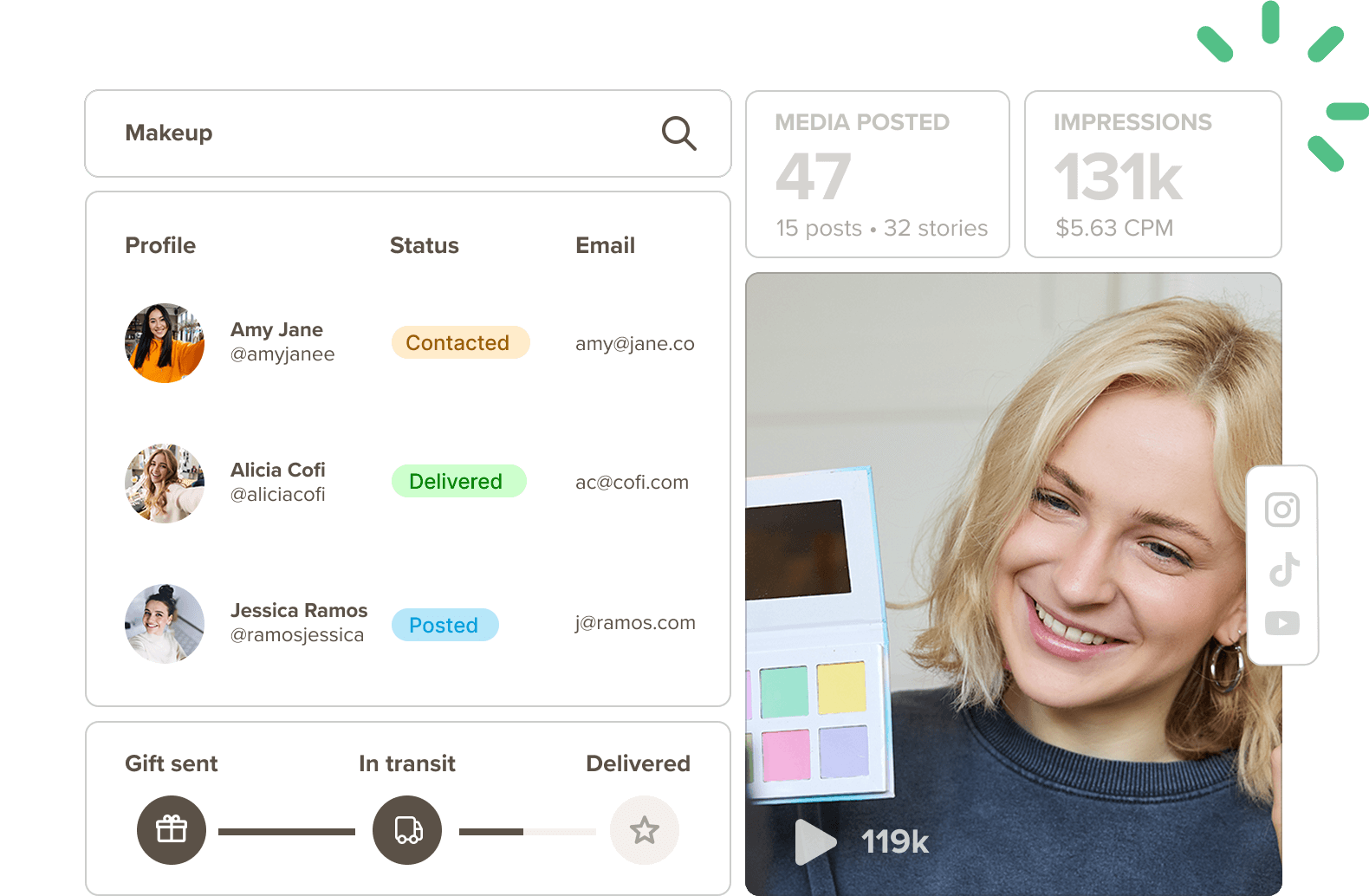
Once you've identified creators worth reaching out to, MightyScout's built-in CRM lets you manage and execute bulk outreach directly — no jumping to a separate email tool or tracking responses in a spreadsheet. You can contact multiple creators at once, track who's responded, and move them through the pipeline from prospect to confirmed creator without the workflow falling apart across tools.
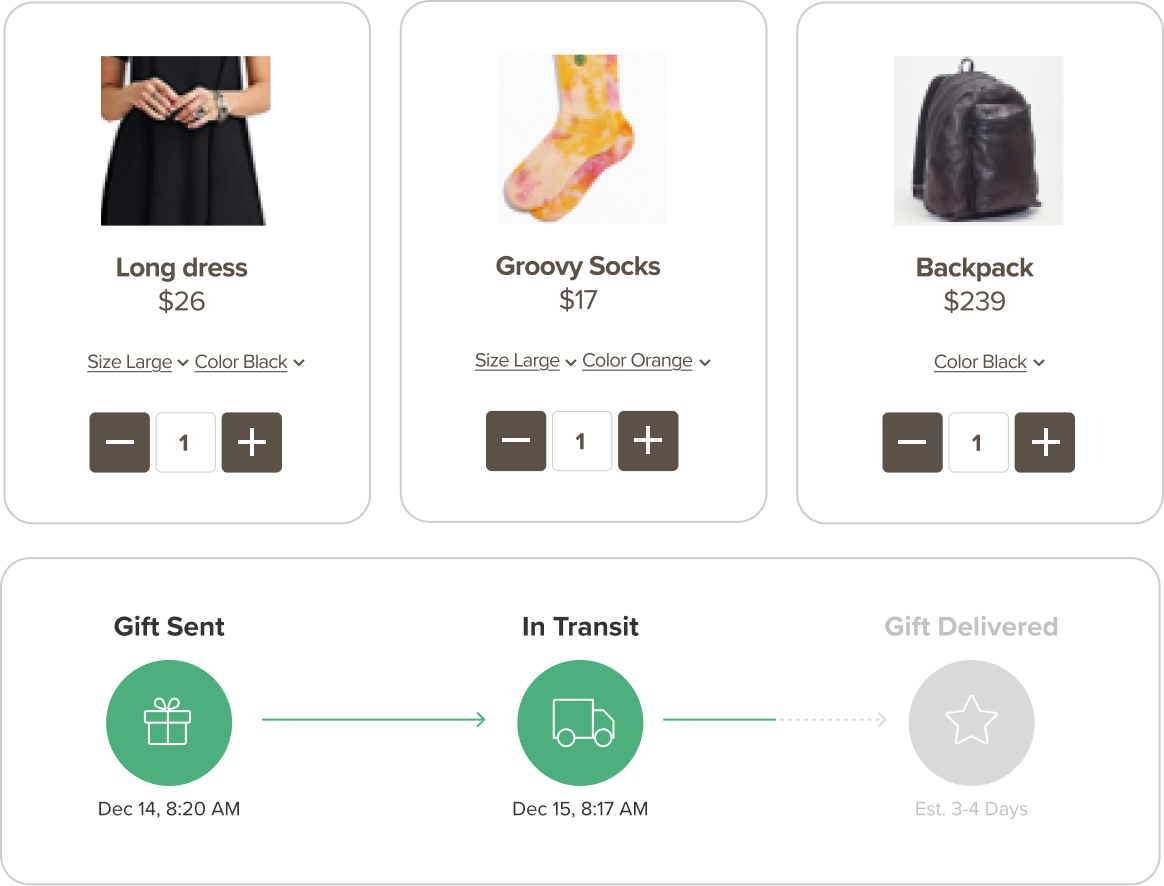
The problem without a tool: managing who's been contacted, who agreed, who received product, who posted, and who's overdue becomes a spreadsheet job once you're past 20 creators.
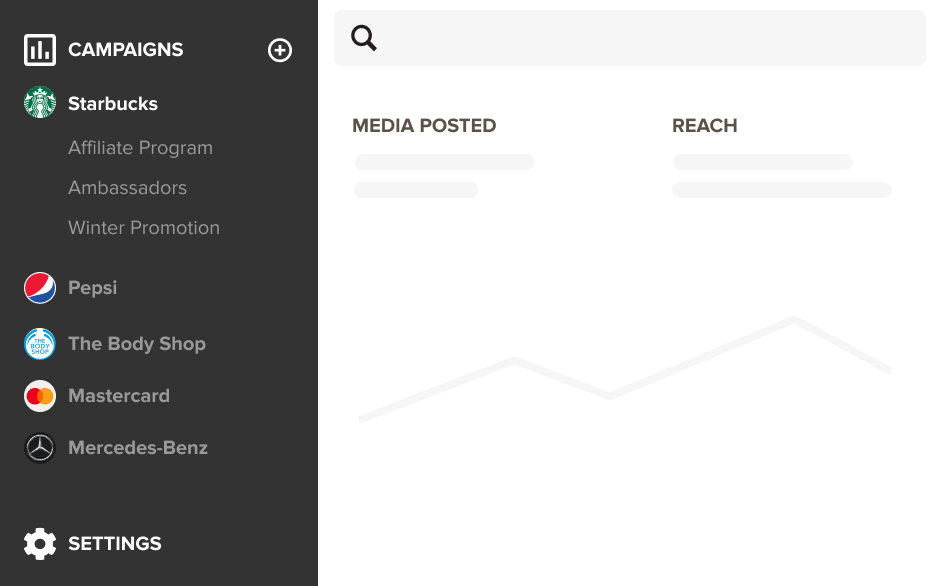
How MightyScout helps: Set up a campaign by inputting your creator roster — paste or import usernames, assign them to campaigns by brand, specify the hashtags and handles they'll be using. MightyScout monitors those accounts automatically from that point forward.
You can see at a glance who has posted and who hasn't — critical for agencies reporting posting compliance to clients in real time. For brands on Shopify or WooCommerce, MightyScout integrates directly with your store to manage product gifting. Instead of coordinating individual orders, you connect your store and send product to creators in a few clicks.
“I'm obsessed with the fact that I connected Shopify and can send all 175 orders in one moment instead of taking two hours to do it.”

Hannah, Marketing Manager
G.O.A.T. Fuel — Energy drink brand
The problem without a tool: Instagram Stories disappear after 24 hours. If you're not watching at the right moment, the content is gone — no asset, no metrics, no record. For a product gifting campaign with 50+ creators, manually checking every account every day is not a realistic ask.
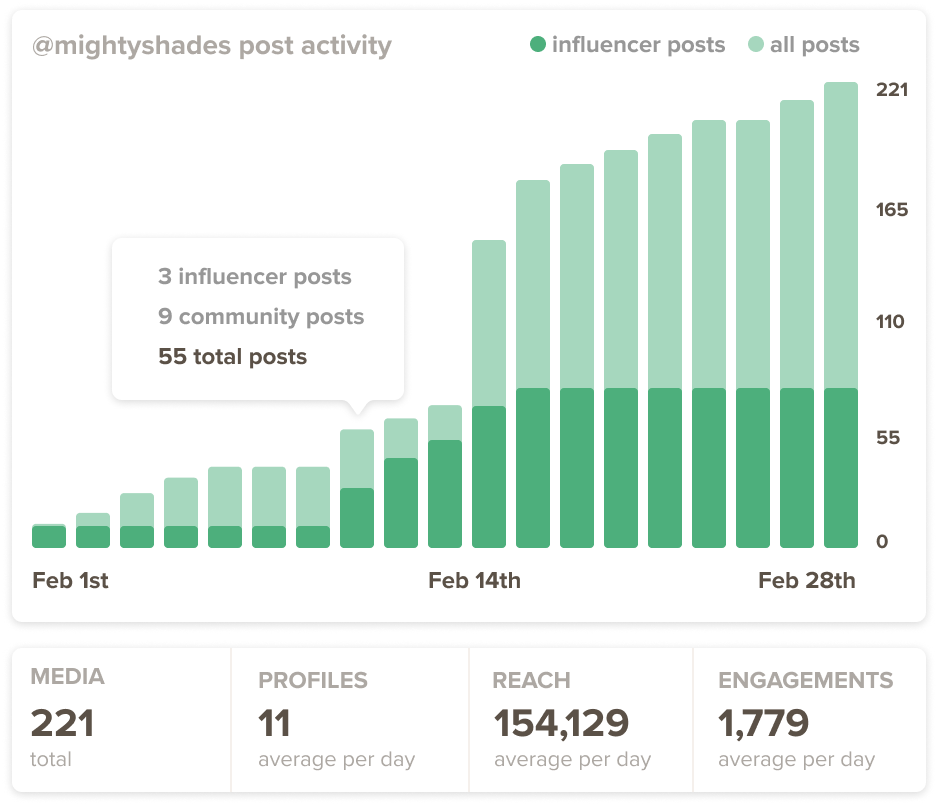
How MightyScout helps: MightyScout monitors every creator in your campaign 24/7 — posts, Reels, and Stories — and captures them automatically before they expire. You get notified when a creator posts. The content appears in your dashboard. You never have to log in on a Sunday to screenshot a Story.
Critically, MightyScout tracks content from unpaid campaigns too — not just paid partnerships. Most influencer platforms only track content where a paid tag is in place. MightyScout captures organic content from seeded creators and anyone posting about your brand without a formal contract. For product gifting programs specifically, this is essential.
What gets captured:
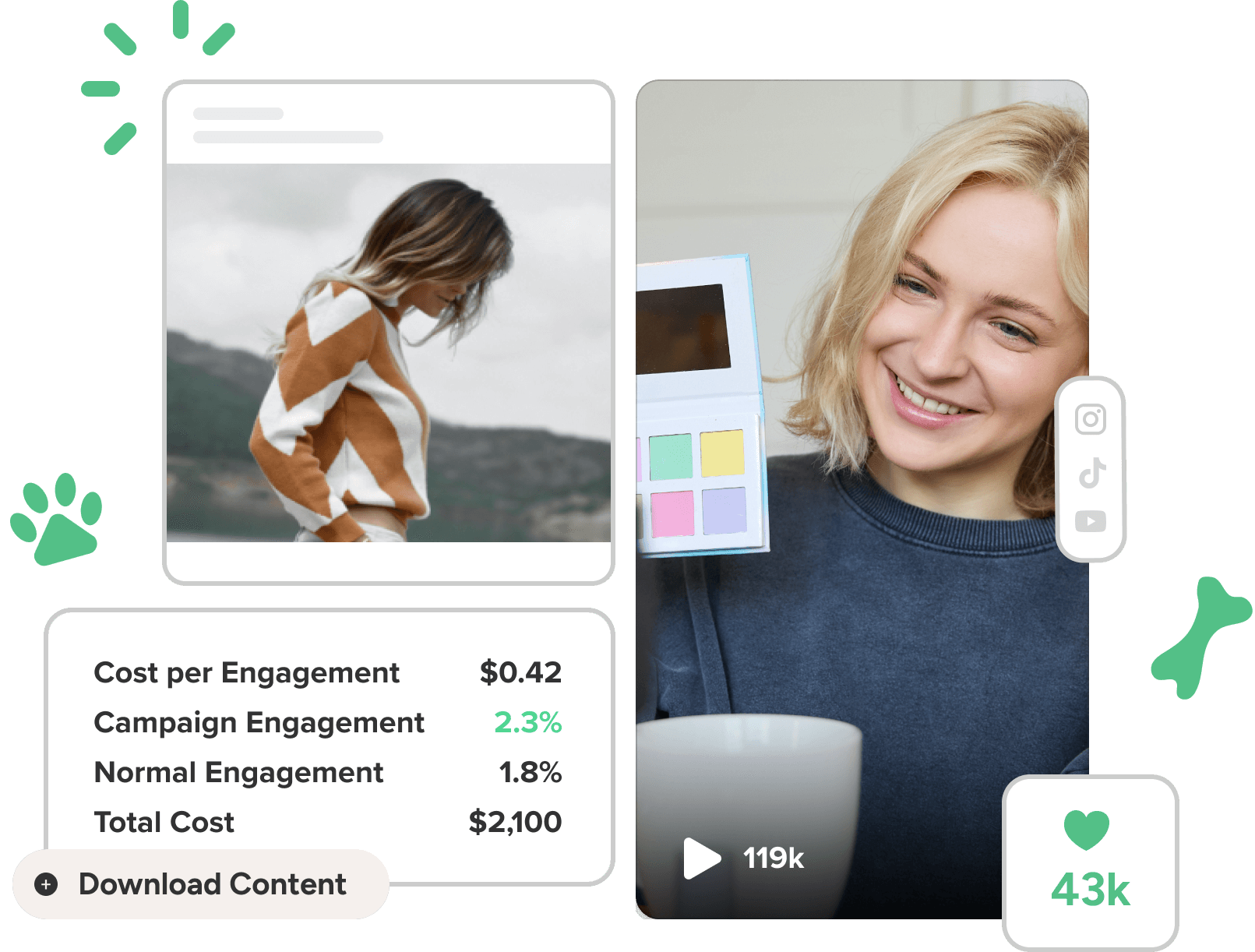
The problem without a tool: creator content lives on the creator's account. To repurpose it for paid ads, website, email, or sales materials, someone has to find it, download it, rename it, organize it, and store it somewhere the media team can access. At 50+ creators, this is a part-time job.
How MightyScout helps: Every piece of captured content is available for download directly from the MightyScout dashboard. Your team can identify top-performing content by engagement metrics, download the assets, and hand them to your paid media team — without a scavenger hunt.
This is the link between your organic creator program and your paid creative pipeline. The content your seeded creators post organically is exactly what you want running as whitelisted ads or DCT creative — it's authentic, niche-specific, and the data already shows it resonates. MightyScout makes that content findable, downloadable, and organized.
The problem without a tool: building a campaign report manually means pulling post-level data from individual accounts, calculating reach and engagement by hand, assembling screenshots into a deck — then doing it all over again next month. One agency team described spending 1–2 days per week just on Stories monitoring and reporting.
How MightyScout helps: MightyScout's dashboard gives you live campaign performance at the campaign level and post level — without manual data collection. Metrics include:
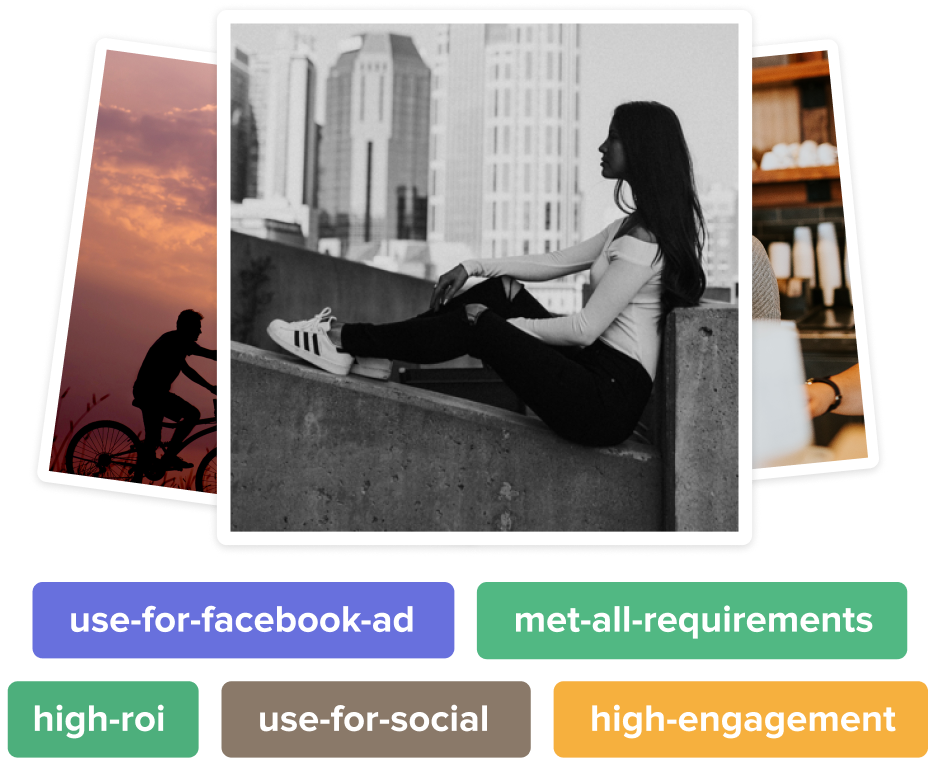
Beyond the numbers, MightyScout's visual content grid lets you see all creator content side by side, sorted by views. When your top-performing videos are laid out together, patterns become obvious fast — same hook style, similar setting, consistent product angle. That visual layer is what turns reporting into creative strategy.
When it's time to report, MightyScout generates client-ready reports in one click.
“Before MightyScout, we had to spend 1–2 days every week gathering information for reports. Now we can gather the information in 2 minutes: the time it takes to download and send MightyScout's report to my clients.”
Tomás, CEO
FRISBI — Leading influencer marketing agency in Chile
Manual influencer tracking at scale costs the average marketing team approximately $18,000/year in staff time, at 15 hours/week and a $25/hour rate.
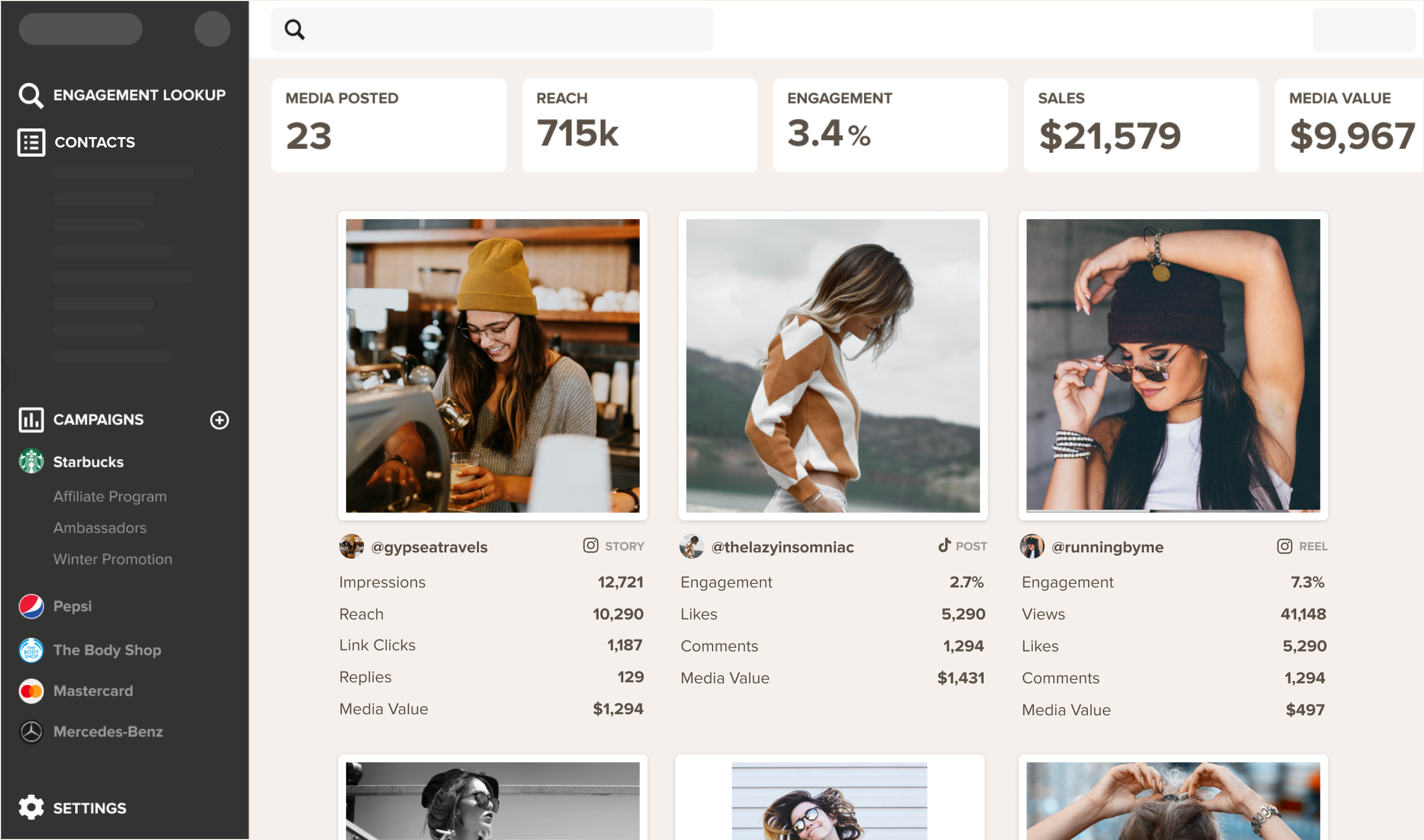
MightyScout is built to do one thing exceptionally well: track and report on influencer and UGC campaigns across Instagram, TikTok, YouTube, and Facebook. It's not a creator marketplace. It's not a full-suite CRM. It's the influencer tracking and reporting layer that most all-in-one platforms treat as an afterthought. If you're comparing it to alternatives, that's the trade you're making: depth on tracking over breadth on everything else.
Several agencies use MightyScout alongside all-in-one platforms specifically because the influencer tracking capability is sharper. One agency customer: "One of our clients is using Grin, which they've onboarded us onto, but we strongly prefer MightyScout — for us, it is the best platform."
MightyScout is the right fit if:
Pricing starts at $99/month. Scales based on creators tracked and brands under management. Month-to-month — no annual contract lock-in. 14-day free trial, no credit card required.
We'll set it up with your influencers before the call. 14-day free trial, no credit card required.
08 Measurement
UGC campaigns touch multiple objectives — brand awareness, content library growth, paid ad performance, direct revenue. Your KPIs should reflect which stage you're optimizing for.
09 For agencies
Agencies face a structural challenge: the work is labor-intensive, and labor eats margin. Every hour spent monitoring, screenshotting, and reporting is an hour you're not getting paid for.
The agencies running the most profitable programs have solved this with three moves:
Real-time monitoring, client-ready reports, ROI attribution — without the spreadsheets.
10 By industry
User-generated content works everywhere. But how you run it — which creator profiles to seed, which formats convert, what "good" looks like — shifts significantly by vertical. Here's what works in the categories where creator programs are most active.
Beauty & skincare
Consumers expect to see real skin, real results, real people — not aspirational photography. Polished studio content actively hurts conversion in beauty because it signals "too good to be true."
Skincare-focused micro-creators (10K–100K) with niche audiences (acne-prone skin, mature skin, sensitive skin) consistently outperform beauty megainfluencers. Specificity signals trust.
Before/after transformation (Day 1 / Day 30 / Day 60) — drives 2.4x higher CVR than product-only content; "Get ready with me" with product integrated naturally into routine; ingredient explainer ("Why I switched to X after learning about Y"); skeptic-to-believer arc.
Gift full product kits (not single items) to give creators enough product for a genuine 30-day trial. Content about real, extended use outperforms first-impression unboxings in this category.
DTC / e-commerce
Creative is the primary performance lever in DTC paid social. Meta's Advantage+ has automated audience targeting — what wins is the ad. DTC brands running high volumes of UGC creative (10–20 new assets/week) consistently outperform competitors running lower-volume, higher-production content.
At $20 COGS and 30–33% post rate, each organic post costs ~$60 in product. Agency-produced content runs $300–$1,000/piece. Run product gifting as your R&D pipeline — what works organically tells you exactly what to commission at scale.
Unboxing + first impression; problem-agitation-solution (PAS); rapid social proof stack; "why I switched from [competitor]" (without naming them).
At $1K–$5K/day paid spend, produce 10–20 new creative assets per week. Don't pause campaigns to wait for perfect creative — launch everything and kill what doesn't perform at 2–3x target CPA after 50 conversions.
Consumer apps & SaaS
There's no physical product to seed. The activation cycle is longer (download → onboard → actually use it → create content). What to seed instead: extended free access (3–6 months minimum), premium tier or in-app credits, branded influencer kits (physical merch + access code + creative guide).
Prioritize creators who already live in your use-case category. A budgeting app should seed personal finance creators, not generic lifestyle. 25 micro-creators drove 4.5x more revenue than 2 macro creators at the same budget in app campaigns. Scale width, not height.
Expert commentary / "podcast clip" format for trust-based apps; scenario-based skits that dramatize the problem; viral surprise / "pattern interrupt"; street interview / "credibility hook."
Creators run accounts centered on the problem space, not the product. A journaling app seeds creators running "mental health journey" accounts where the app is embedded in the content, not pitched. This is how Bumble runs their TikTok.
Fashion & apparel
Fit, styling, and "how does it look on a real body" are the primary purchase objections in fashion. UGC solves them better than any branded content can. Diversity of body type, skin tone, and personal style in creator content directly maps to consumer confidence.
"Get ready with me" (GRWM) with full outfit breakdown; haul + honest review (what fits weird, what runs small, what's worth it); style challenge or remix ("3 ways to wear the same piece"); day-in-the-life with product integrated naturally.
Fashion is the strongest category for organic hashtag campaigns — ASOS's #AsSeenOnMe is the textbook example of turning customers into a distributed content team.
Fashion UGC has strong longevity. A well-styled look doesn't expire the way a trending audio hook does. Negotiate extended rights (12+ months, multi-platform) on top-performing content.
Health, wellness & fitness
Health claims are skeptical territory. Consumers discount brand-produced "results" content. Real people, real journeys, documented over time — that's what converts.
Nano and micro-creators with genuine health/fitness journeys using the product as part of a real lifestyle change. Long-term relationship matters more in this category than any other.
Progress documentation (Day 7 / Day 30 / Day 90); "What I eat in a day" with product integrated naturally; myth-busting / ingredient education; 30-day community challenge campaigns.
Health and wellness is the highest-scrutiny category for the FTC. Require explicit "#ad" or "Paid Partnership" disclosure in all sponsored content. Brief creators explicitly on what they cannot say — no unsubstantiated medical claims.
Give creators 60–90 days of product before expecting content. In this category, authentic long-term use is the asset — don't rush it.
11 FAQ
12 Reference
MightyScout tracks every post, Story, and mention from your creator roster — in real time. Purpose-built for brands and agencies running influencer marketing and user-generated content campaigns.
The exact steps brand and agency teams use to go from zero to live creator program in 30 days.
MightyScout will send you this resource plus occasional content on influencer marketing and UGC. Unsubscribe anytime. Privacy Policy